Speed to Lead: What It Means, What the Research Says, and How to Automate It
What speed to lead means, what the research says about response time, how to measure yours, and how to automate the first call so new leads hear from you in seconds.
By the CaraDesk team · · 10 min read
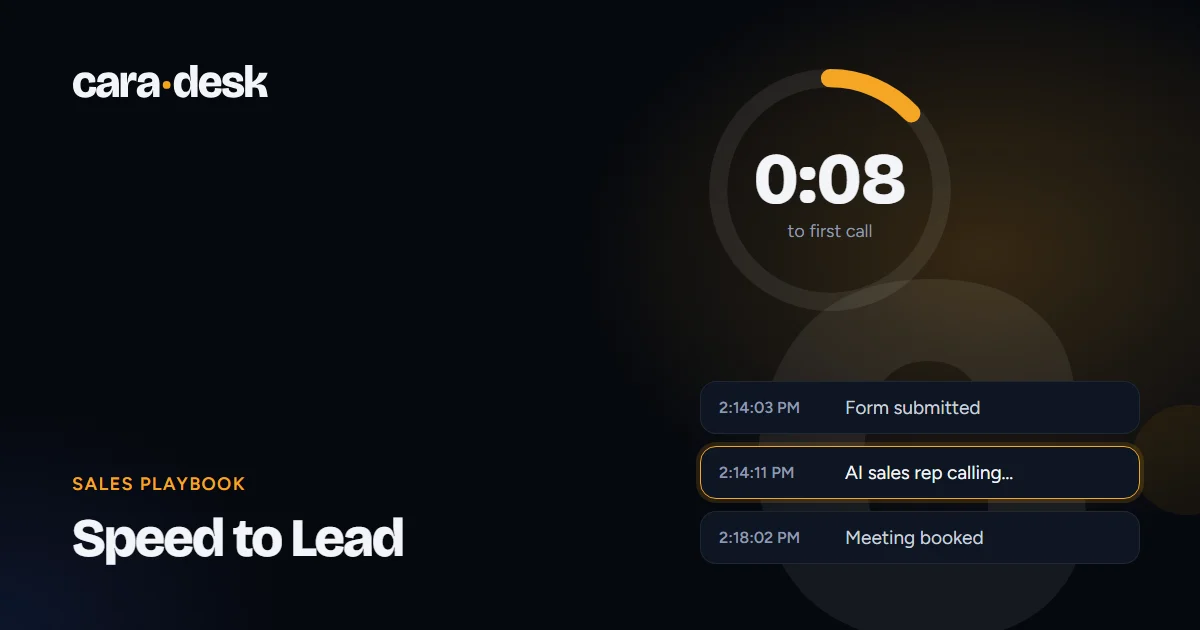
- Speed to lead is the time between a lead's inquiry and your first real conversation with them.
- In a widely cited Harvard Business Review study, firms that tried to reach a lead within an hour were nearly seven times as likely to qualify it as firms that waited an hour longer.
- Measure it per lead source and by time of day — after-hours leads are usually the slowest.
- Automation closes the gap: an AI sales rep can call a new lead within seconds, during the calling hours you set.
In this article
What does speed to lead mean?
Speed to lead is how long it takes your business to respond to a new lead — someone who filled in a form, requested a quote, clicked an ad or left a missed call. The clock starts when the inquiry arrives and stops at the first meaningful contact: a real conversation, not just an automatic "thanks, we'll be in touch" email.
It sounds simple, but most teams don't know their real number. Leads arrive at night, at weekends, during meetings and while reps are on other calls. A response time that looks fine on a Tuesday morning can stretch to a full day for a lead that comes in on Friday evening.
What the research says
The best-known study on the subject was published in Harvard Business Review in 2011: "The Short Life of Online Sales Leads" by James Oldroyd, Kristina McElheran and David Elkington. Two findings are worth knowing:
- An audit of 2,241 U.S. companies. The researchers sent each one a test lead through its website and timed the reply. 37% responded within an hour, 16% within one to 24 hours, 24% took more than 24 hours — and 23% never responded at all. Among companies that responded within 30 days, the average response time was 42 hours.
- An analysis of about 1.25 million leads. Firms that tried to contact a lead within an hour of the inquiry were nearly seven times as likely to qualify it — to have a meaningful conversation with a decision maker — as firms that waited an hour longer, and more than 60 times as likely as firms that waited 24 hours or more.
The data is from 2011, and buyer behavior has changed since. But the direction makes sense to anyone who has bought anything online: when you ask for a quote, you're interested right now. An hour later you're comparing three other companies, and the next day you may have forgotten you asked.
A note on statistics: you'll find many speed-to-lead numbers online, often without a source. Before you quote a number in a sales meeting, check where it came from and when the data was collected.
Why fast response works
- Intent peaks at the moment of inquiry. The person has your website open and the problem fresh in mind.
- The first company to call sets the frame. It gets to ask the questions, explain the options and book the next step.
- People shop around. Many leads contact several businesses at once. A fast call often decides who gets the conversation.
- Memory fades. A call two days later can get "Sorry, what was this about?"
How to measure your speed to lead
- Send yourself a test lead. Fill in your own website form at different times — Tuesday at 10 AM, Thursday at 6 PM, Saturday at noon — and time the response.
- Pull timestamps from your CRM. Compare when each lead was created with the first logged call or conversation, not the first automated email.
- Use the median, not just the average. A few very slow leads can hide behind a good-looking average, and a few instant ones can hide a slow typical response.
- Split by source and time. Website forms, ad leads, marketplace inquiries and missed calls often behave very differently. After-hours leads are usually the slowest.
- Track the misses. Count leads that never got a real conversation at all — they're often the biggest opportunity.
Ways to improve it
| Approach | What it fixes | Limits |
|---|---|---|
| Instant routing and round robin | Leads reach a rep immediately instead of waiting in a shared inbox | Only works when reps are free and on shift |
| Instant text or email acknowledgment | The lead knows you got the request | It isn't a conversation; many people don't reply |
| Call-within-minutes rule for reps | Builds the habit and makes speed visible | Breaks down during busy hours, meetings and evenings |
| Extended or shift coverage | Covers more hours with people | Costly to staff evenings and weekends |
| AI sales rep that calls back automatically | First call within seconds, every time, during your calling hours | Needs a clear playbook and handoff rules; complex deals still go to people |
Most teams combine several of these. The AI handles the first call and qualification, and your reps take over the conversations that need a person.
Speed to lead automation with AI
Speed-to-lead automation used to mean an autoresponder email. Today an AI voice agent can actually have the first conversation. Here's how our AI Sales Rep works:
- A lead arrives in your form, CRM or ad platform.
- The AI calls within seconds — during the calling hours you set, based on the lead's local time. Leads that come in outside those hours are queued for the start of the next window.
- It has a real conversation. No menus and no "press 1": the lead can interrupt, ask questions and push back. The AI answers from your playbook and handles common objections.
- It books the next step on your team's calendar — a meeting, a site visit, a consultation.
- It hands off when it should. If the lead wants a person, it transfers the call to your team with a short summary. If nobody's available, it books a call-back.
- Everything is saved. Every call is recorded with the right notices, transcribed and summarized, and the result goes into your CRM.
It works with HubSpot, Salesforce, Pipedrive, Zoho CRM, GoHighLevel, Google Calendar, Outlook, Calendly and others, plus webhooks for everything else. Most voice projects go live in 1–5 business days.
Ask how this would work for your business. Or send a short request and get a tailored plan and price by email within one business day.
Rules to respect
Fast doesn't mean anything goes. Calling new leads is subject to consent and calling-time rules in every market:
- United States: consent rules for automated calls and texts (the TCPA), state calling-hour rules and do-not-call lists.
- United Kingdom: TPS and CTPS screening for calls and PECR rules for marketing messages.
- Canada: the National Do Not Call List and CASL consent rules for commercial messages.
Our AI sales rep calls people who expect to hear from you: inbound callers, form fills and contacts you have the right to call. It never pretends to be human — if someone asks whether they're talking to AI, it answers honestly. Scripts, calling hours and do-not-call rules are agreed before launch. This isn't legal advice; check your own situation with your counsel.
Speed to lead in real estate and home services
Real estate, home improvement, solar, HVAC and similar businesses live and die by speed to lead. Buyers and homeowners often contact several companies at once and pick whoever gets back to them first with a clear next step.
A good first call in these industries is short and practical: confirm the inquiry, ask about timeline, budget and location, and book a showing, a site visit or a call with a specialist. That's exactly the kind of structured conversation AI handles well — while complex negotiations stay with your agents and estimators.
A speed-to-lead checklist
- Do you know your median response time by lead source?
- What happens to a lead that arrives at 8 PM on a Friday?
- Does every lead get a real conversation, not just an email?
- Is the first call scripted with clear qualifying questions?
- Can a lead book the next step on the first call?
- Is every call recorded, summarized and logged in the CRM?
Want to see how your team handles calls after the first contact? Our sales analytics reviews every call and deal and shows where conversations stall. And if you're weighing AI tools inside a big CRM, read our Salesforce Agentforce alternative guide.
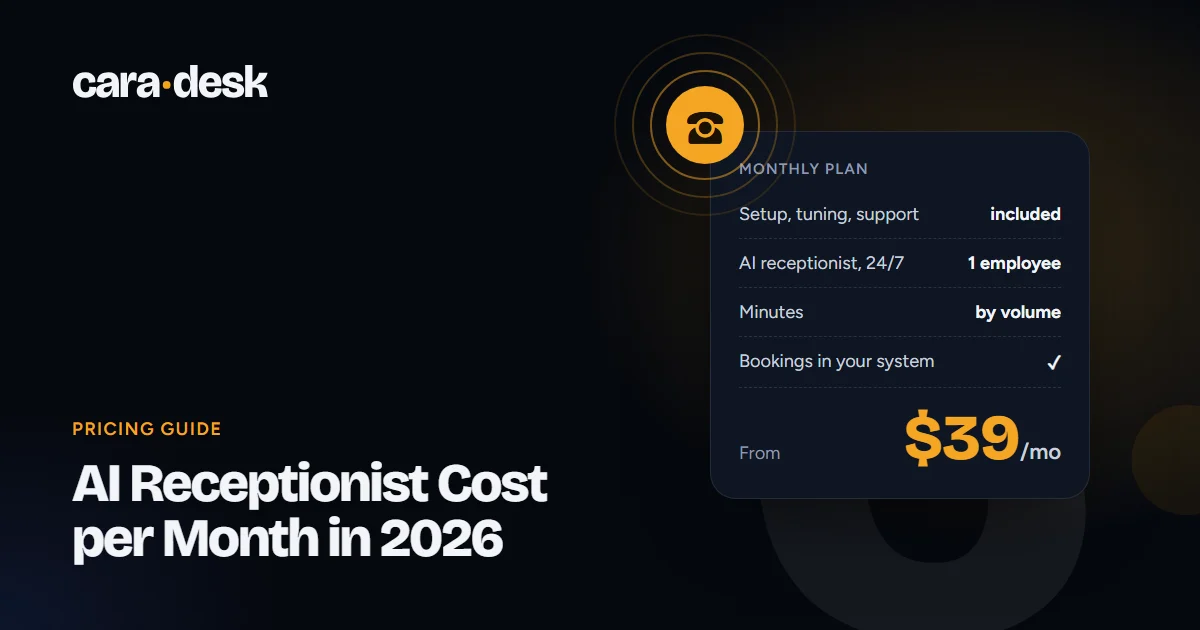 Pricing guideAI Receptionist Cost per Month in 2026: What You Actually Pay For
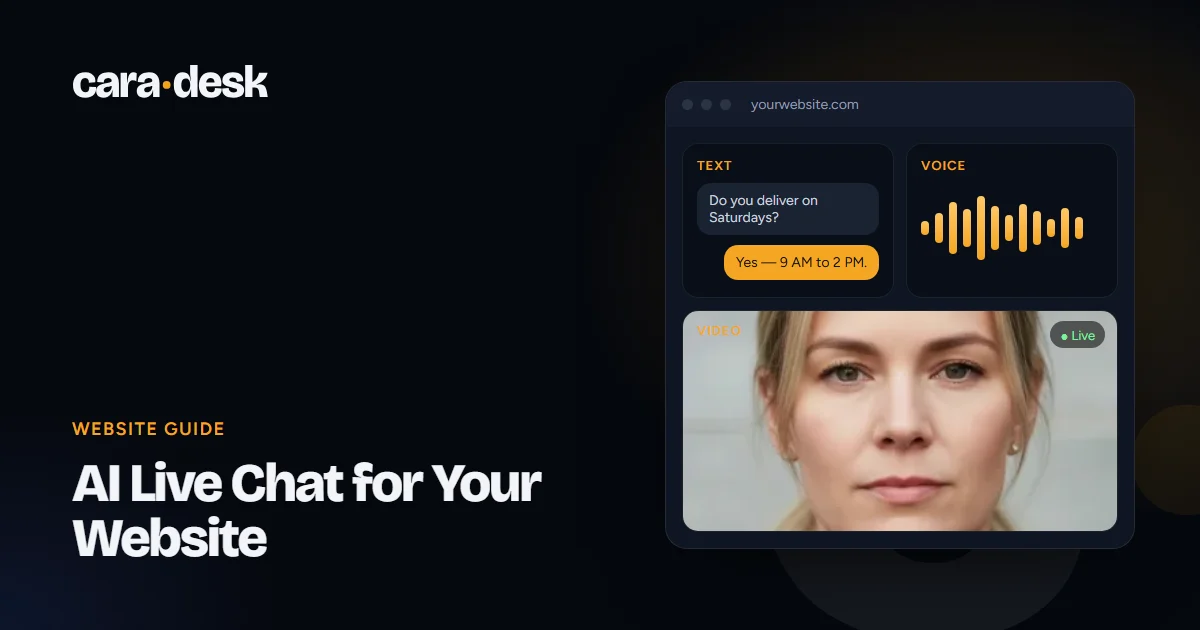 Website guideAI Live Chat for Your Website: Text, Voice or Video — Which Fits Your Business?
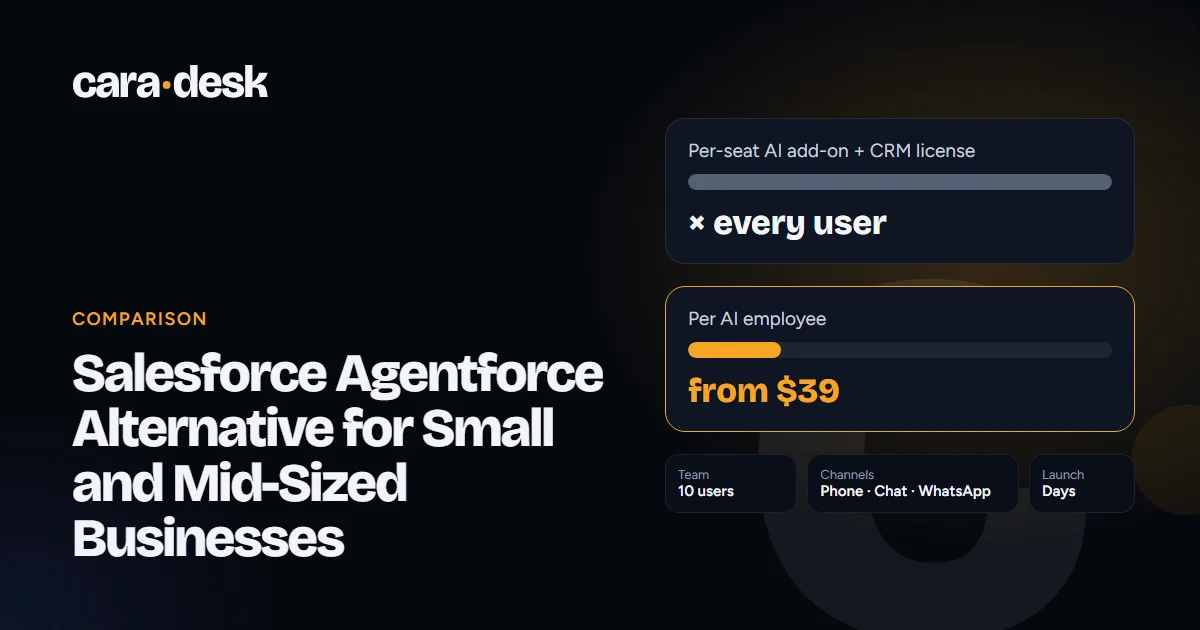 ComparisonSalesforce Agentforce Alternative for Small and Mid-Sized Businesses